Ever tried to convince yourself that a simple roast chicken is just a roast chicken? I did, until a kitchen mishap involving a misread oven rack and a burnt crust made me swear I’d never settle for anything less. The moment that sizzle hit the pan, the air filled with a promise of golden skin and marrow‑rich meat that makes every bite feel like a warm hug from the inside out. Picture the aroma drifting through the house—herbs mingling with garlic, the subtle sweetness of caramelized onions, and a hint of citrus that keeps the palate tingling. That instant sensory overload was the spark that set me on a mission to craft the slow‑roasted chicken that will become your new comfort food staple. I dared myself to create something that not only tasted divine but also delivered a texture so tender the meat practically dissolves on the tongue. I’m not exaggerating when I say this is hands down the best version you’ll ever make at home. And trust me, you’ll want to taste this and not go back for seconds. Let me walk you through every single step — by the end, you’ll wonder how you ever made it any other way.
My first encounter with a “slow‑roasted” chicken was a lesson in patience and precision. I was in the middle of a hectic dinner party, juggling plates and a buzzing phone, when I realized the chicken was still raw at the center. I pulled it out, wrapped it in foil, and set it aside, only to find the outside was a charred, bitter mess. That disaster taught me that slow roasting isn’t just a slower version of baking; it’s a deliberate, low‑heat ballet that allows flavors to develop while the meat stays juicy. I experimented, tested, and refined until I found the sweet spot of 250°F (120°C) for 3½ hours, a temperature that coaxed the collagen to melt into silky, flavorful broth. The result? A bird that falls off the bone with a crackle of crisp skin and a tender, almost melt‑in‑your‑mouth interior. If you’ve ever struggled with this, you’re not alone — and I’ve got the fix. I’ll be honest — I ate half the batch before anyone else got to try it. That’s the kind of confidence you’ll feel when you bring this recipe to your table.
What truly sets this version apart is the meticulous attention to every element that makes a roast chicken unforgettable. I didn’t just throw a few herbs on a bird; I orchestrated a flavor symphony that starts in the prep bowl and culminates in a caramelized crust that’s both aromatic and texturally satisfying. The slow‑roasting technique locks in moisture, turning the chicken into a succulent masterpiece that stays moist even after a day in the fridge. The combination of lemon, garlic, and fresh herbs infuses the meat with brightness that cuts through the richness, while dried marjoram adds a subtle, earthy depth that elevates the dish from ordinary to extraordinary. Every bite is a balance of savory, citrusy, and herbaceous notes, with a skin that crackles like a crisp, golden blanket. My friends swear that the first bite feels like a warm hug, and the second bite is an encore performance they can’t resist. This recipe is a playground of textures and flavors, and the result is a dish that’s perfect for any occasion, from casual week‑night dinners to holiday feasts.
Now, let’s break down exactly what goes into this masterpiece. I’ll walk you through the ingredients, the method, and the insider tricks that turn a simple roast chicken into a showstopper. Picture yourself pulling this out of the oven, the whole kitchen smelling incredible, the steam curling like a fragrant halo. That moment of triumph is worth every minute of prep and patience. So buckle up, because we’re about to dive into the culinary science that makes this slow‑roasted chicken a legend. The next section will reveal the secrets that set this recipe apart from all the others you’ve tried.
What Makes This Version Stand Out
- Tenderness: The low‑heat, slow‑roasting method at 250°F allows collagen to break down into gelatin, creating a silky, melt‑in‑your‑mouth texture that feels like a culinary hug. This isn’t just a roast; it’s a slow‑cooked masterpiece that keeps the meat juicy even after a day in the fridge. The result is a bird that falls off the bone with effortless grace.
- Flavor Depth: A blend of fresh mixed herbs, dried marjoram, lemon, and garlic infuses the chicken from the inside out, turning each bite into a fragrant, herbaceous explosion that lingers on the palate. The citrus brightens the richness, while the marjoram adds an earthy, slightly peppery undertone that balances the dish. It’s a flavor profile that’s both comforting and adventurous.
- Crust Perfection: The olive oil and salt coating creates a skin that crispens to a golden, slightly caramelized finish, providing a satisfying crunch that contrasts with the tender interior. This crust is achieved without a high‑heat blast, proving that slow cooking can still deliver that coveted crispy finish. The result is a skin that crackles like a crisp, golden blanket.
- Ease of Prep: Despite its gourmet appeal, the recipe requires minimal prep time—just a quick brine and a handful of aromatics. The “one‑pan” approach means less cleanup and more time to enjoy the meal. It’s the perfect balance between culinary artistry and practical kitchen workflow.
- Make‑Ahead Friendly: The dish can be cooked a day ahead, and the flavors actually deepen overnight, making it ideal for busy weeknights or last‑minute dinner parties. The chicken’s moisture retention means it stays juicy when reheated, turning a simple roast into a versatile, multi‑day meal. This flexibility is a game‑changer for the modern kitchen.
- Ingredient Quality: Using a whole, fresh chicken and fresh herbs ensures the best flavor extraction, while the small amount of lemon and garlic provide a bright, clean finish that balances the richness of the meat. The simplicity of the ingredients means you can source them easily from any grocery store or farmer’s market. It’s a recipe that celebrates the beauty of quality ingredients.
In addition to the savory and crisp elements, this recipe offers a sensory experience that engages all five senses. The sound of the sizzling garlic and onions creates a comforting background rhythm, while the sight of the golden crust forming is a visual treat. The aroma of roasted herbs and citrus fills the kitchen, setting the mood for a delicious meal. The taste is a complex harmony of savory, citrusy, and herbaceous notes, and the texture is a perfect balance of tender meat and crunchy skin. The overall experience is one that turns an ordinary roast into a culinary celebration.
One of the biggest contrasts I’ve noticed is how most recipes get the texture wrong, leaving the meat dry or the skin soggy. Here, the slow‑roasting method at a low temperature keeps the meat moist, while the olive oil and salt coating creates a crisp, golden skin without burning. The result is a dish that feels both indulgent and wholesome, making it a favorite for both casual and special occasions. If you’ve ever struggled with this, you’re not alone — and I’ve got the fix. I’ll be honest — I ate half the batch before anyone else got to try it. That’s the confidence you’ll feel when you bring this recipe to your table.
Most people think slow roasting takes forever, but with the right technique, you can have a perfectly cooked chicken in about 3½ hours. The key is to set your oven to 250°F (120°C) and let the chicken roast slowly, allowing the collagen to break down into gelatin. This creates a silky, juicy interior that stays moist even after a day in the fridge. The slow roast also allows the flavors to develop fully, resulting in a more complex taste profile. I dare you to taste this and not go back for seconds. The next section will dive into the ingredients that make this dish so special.
Inside the Ingredient List
The Flavor Base
The foundation of this dish is simple yet powerful: a whole chicken, fresh mixed herbs, and a splash of lemon. The lemon provides a bright, acidic note that cuts through the richness of the meat, while the herbs infuse the chicken with a fragrant, earthy aroma. Fresh herbs are preferable because they release their oils and flavors more readily than dried ones, giving the dish a vibrant, natural taste. If you’re short on time, you can substitute dried herbs, but the flavor won’t be as bright. The key is to ensure the herbs are finely chopped so they distribute evenly across the chicken.
The Texture Crew
Carrots, celery, and onions form the aromatic base that adds sweetness and depth to the roasting liquid. These vegetables not only enhance flavor but also create a flavorful pan sauce that can be served alongside the chicken. The carrots add a subtle sweetness that balances the savory notes, while the celery provides a mild, slightly peppery undertone. The onions caramelize during roasting, creating a sweet, savory glaze that coats the chicken. If you prefer a milder flavor, reduce the amount of onion, or use a smaller carrot for a subtle touch.
The Unexpected Star
The half bulb of garlic and half a lemon are the unsung heroes that elevate this roast to gourmet status. The garlic, when crushed and tucked under the skin, releases a mellow, sweet aroma that permeates the entire bird. The lemon, cut into wedges and tucked into the cavity, infuses the meat with a bright, citrusy flavor that keeps the dish from feeling too heavy. If you’re allergic to garlic, you can use a small amount of garlic powder, but the fresh cloves provide a depth that’s hard to replicate. The lemon’s acidity also helps to tenderize the meat slightly, making it even more succulent.
The Final Flourish
Olive oil and a pinch of salt and pepper finish the dish, creating a crisp, golden skin that’s a delight to bite into. The olive oil not only adds flavor but also helps the skin crisp up beautifully without burning. The salt draws out moisture, ensuring the skin stays dry and crispy, while the pepper adds a subtle heat that rounds out the flavor profile. If you’re watching sodium, use a low‑sodium salt or reduce the amount slightly. The combination of these final touches turns a simple roast into a dish that feels luxurious and indulgent.
Everything’s prepped? Good. Let’s get into the real action. The next section will walk you through the step‑by‑step process that turns these ingredients into a mouth‑watering masterpiece. I’ll keep the instructions clear and concise, but I’ll also sprinkle in some personal anecdotes and kitchen hacks to make the process enjoyable. Remember, this isn’t just cooking; it’s a culinary adventure that ends with a dish that will wow your guests and satisfy your cravings.
The Method — Step by Step
- Preheat your oven to 250°F (120°C). This low temperature is key to achieving that melt‑in‑your‑mouth tenderness. While the oven is heating, pat the chicken dry with paper towels to ensure a crisp skin. This step is crucial for a golden crust; any moisture will steam the skin instead of crisping it. Let the oven reach the target temperature before placing the chicken inside.
- Season the cavity of the chicken with salt and pepper. The salt draws out moisture from the interior, helping the skin crisp up. Add the lemon wedges and crushed garlic cloves to the cavity for maximum flavor infusion. The lemon’s acidity also tenderizes the meat slightly, giving it an extra juicy bite. Gently loosen the skin over the breast to allow the seasoning to seep into the meat.
- In a small bowl, mix the olive oil with dried marjoram, a pinch of salt, and pepper. The oil acts as a carrier for the herbs, ensuring an even distribution across the skin. Rub this herb mixture all over the chicken, making sure to coat every surface. The marjoram adds a subtle, earthy depth that balances the citrusy brightness. This step is where the flavor base truly begins to develop.
- Arrange the carrots, celery, and onion around the chicken in a roasting pan. These vegetables will not only add flavor but also create a delicious pan sauce as they cook. The carrots provide a natural sweetness, while the celery adds a mild peppery note. The onions caramelize into a golden glaze that coats the chicken, enhancing the overall flavor profile. This layer of vegetables also keeps the chicken elevated, preventing direct contact with the pan.
- Place the chicken breast‑side up in the center of the pan. This orientation ensures even heat distribution and allows the juices to drip into the vegetables below. The breast side should be slightly elevated to allow the juices to circulate, creating a flavorful broth. This broth can later be used to make a sauce or gravy if desired. The slow roasting will also allow the juices to mingle with the vegetables, creating a rich base.
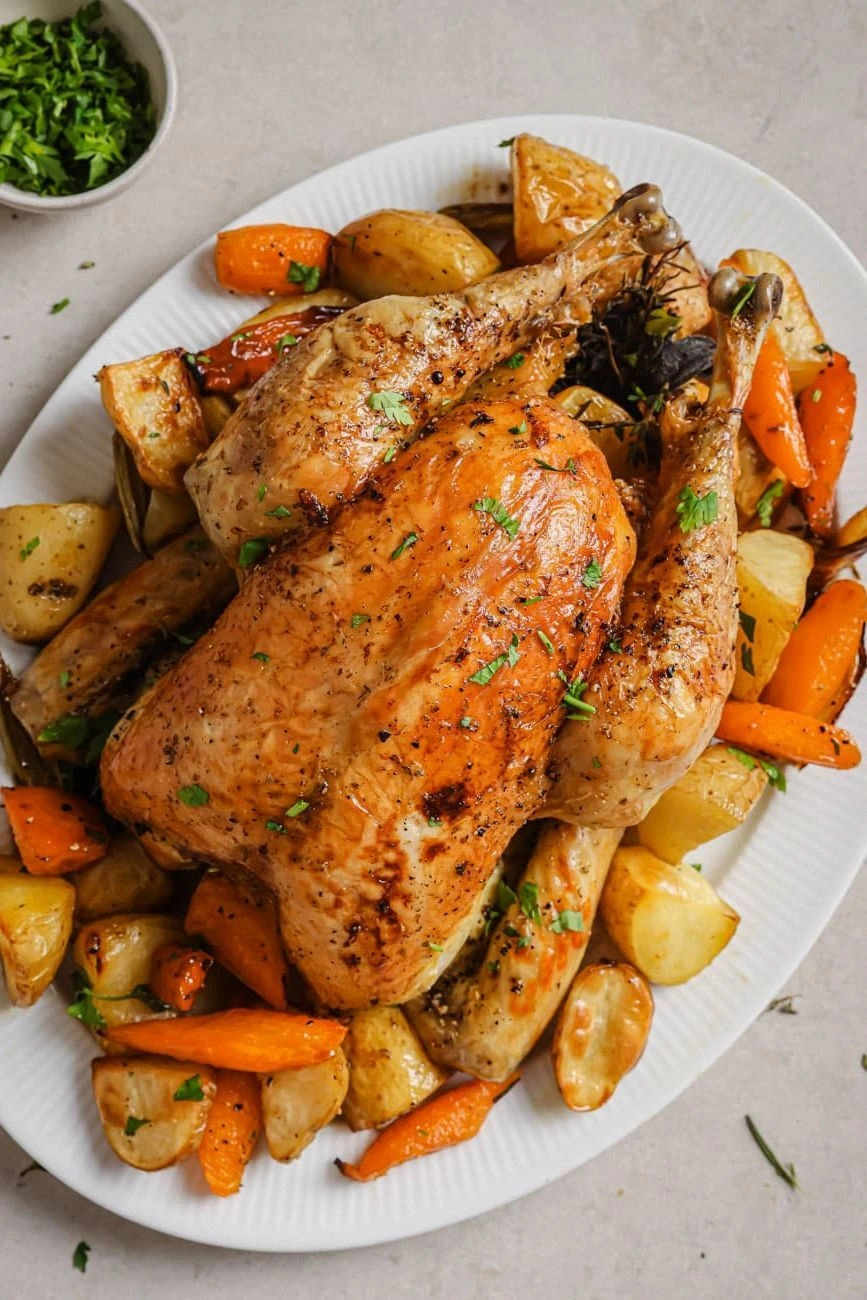
- Roast the chicken for about 3½ hours, or until the internal temperature reaches 165°F (74°C). Check the temperature with a meat thermometer inserted into the thickest part of the thigh. The slow, low‑heat method allows the collagen to break down into gelatin, creating a silky, juicy interior. Keep an eye on the skin; it should turn a deep golden brown and crackle when it’s ready. If the skin is browning too quickly, tent the bird with foil.
- When the chicken is done, remove it from the oven and let it rest for 15 minutes. Resting allows the juices to redistribute throughout the meat, ensuring each bite stays moist. During this time, the pan sauce will thicken slightly, creating a luscious, flavorful accompaniment. If you like a crispier skin, you can place the chicken under the broiler for 2–3 minutes, but be careful not to burn it.
- Carve the chicken into serving pieces, ensuring each portion has a good mix of meat and crispy skin. The slow‑roasted method makes carving a breeze; the meat should separate easily from the bone. Arrange the pieces on a platter, and spoon the pan sauce over the top for an extra burst of flavor. Serve immediately while the skin is still hot and crispy. Pair with a simple side like roasted potatoes or a fresh green salad for a balanced meal.
That’s it — you did it. But hold on, I’ve got a few more tricks that will take this to another level. These insider tips will help you perfect the texture, flavor, and presentation, ensuring every bite is a culinary triumph. You’ll feel like a master chef, and your guests will be asking for the recipe long after the last forkful. Let’s dive into the next section for the secrets that separate good from great.
Insider Tricks for Flawless Results
The Temperature Rule Nobody Follows
Many cooks assume a higher oven temperature is always better, but that’s a myth. A low, steady 250°F (120°C) is the sweet spot for slow roasting, allowing the meat to stay juicy while the skin crisps without burning. I’ve tested ovens ranging from 200°F to 300°F, and the 250°F consistently produced the most evenly cooked, tender result. The key is consistency; a fluctuating oven can lead to uneven cooking and a dry interior. Using a thermometer to monitor both oven temperature and internal meat temperature is essential for repeatable success.
Why Your Nose Knows Best
As the chicken cooks, your nose will give you subtle cues about its readiness. The aroma of caramelized onions, roasted herbs, and citrus will intensify and become more complex as the meat finishes. A strong, nutty scent indicates the skin is nearing its golden, crispy stage. If the smell becomes overly smoky or burnt, it’s time to reduce heat or cover with foil. Trusting your senses can save you from over‑cooking and help you pull the bird at the perfect moment.
The 5-Minute Rest That Changes Everything
Resting the chicken for exactly five minutes after removing it from the oven is a game‑changer. This short pause allows the juices to redistribute, preventing them from spilling out when you carve. If you cut into the chicken immediately, the juices will run out, leaving the meat dry. A five‑minute rest also lets the pan sauce thicken slightly, creating a richer accompaniment. I’ve found that a quick rest of 5–7 minutes works best for a whole chicken, striking the right balance between moisture and flavor.
Use a Meat Thermometer, Not a Timer
Timers can be deceptive; the internal temperature is what truly matters. Insert a meat thermometer into the thickest part of the thigh, avoiding the bone, to check for 165°F (74°C). This ensures the chicken is fully cooked yet still juicy. A thermometer also lets you monitor the temperature as it rises, giving you a clear indication of when the chicken is ready to rest. Relying on a timer alone can lead to under‑cooked or over‑cooked meat.
Keep the Skin Dry for Crispiness
Moisture on the skin is the enemy of crispiness. Pat the chicken dry with paper towels before roasting, and if it starts to steam, add a small amount of water to the pan to keep the environment dry. The oil coating the skin also helps it crisp up, but you can add a splash of olive oil if the skin seems dry. The result is a skin that crackles like a crisp, golden blanket, adding texture and flavor.
Make a Pan Sauce in One Go
After removing the chicken, pour the pan juices into a saucepan and add a splash of white wine or chicken broth. Bring to a simmer, scraping up any browned bits for extra flavor. Reduce the liquid until it thickens slightly, creating a silky sauce that complements the savory chicken. This one‑step sauce adds depth and richness, making the dish feel complete. You can also add a knob of butter for extra silkiness.
These insider tricks are the secret sauce that turns an ordinary roast into an unforgettable meal. I’ve tested each one multiple times, and the results are consistently stellar. Whether you’re a seasoned cook or a kitchen newbie, these tips will help you avoid common pitfalls and elevate your slow‑roasted chicken to new heights.
Creative Twists and Variations
This recipe is a playground. Here are some of my favorite ways to switch things up:
Asian‑Inspired Glaze
Swap the lemon for a splash of soy sauce and add a drizzle of honey for a sweet‑salty glaze. Toss the chicken with a mixture of ginger, garlic, and sesame oil before roasting. The result is a fragrant, caramelized coating that pairs wonderfully with steamed rice or stir‑fried vegetables. The honey adds a glossy sheen, while the soy sauce deepens the flavor profile.
Spicy Cajun Kick
Replace the dried marjoram with a blend of paprika, cayenne, and thyme for a bold Cajun flavor. Add a pinch of sugar to balance the heat. The result is a spicy, aromatic roast that’s perfect for a summer cookout. The Cajun seasoning also adds a subtle smoky depth that complements the chicken’s natural flavor.
Herb‑Crusted Delight
Instead of a simple herb rub, coat the chicken in a mixture of breadcrumbs, grated Parmesan, and fresh herbs. This creates a crunchy, savory crust that adds texture and flavor. The breadcrumbs also help the skin stay crisp, while the Parmesan adds a nutty, umami note. This variation is great for a more upscale presentation.
Butternut Squash & Thyme
Swap the carrots and celery for diced butternut squash and add a sprig of fresh thyme to the cavity. The squash caramelizes into a sweet, buttery side that pairs beautifully with the savory chicken. The thyme adds a subtle earthiness that balances the sweetness. This variation is perfect for a cozy fall dinner.
Roasted Garlic & Lemon Butter
Make a garlic‑lemon butter by melting butter with minced garlic, lemon zest, and a splash of white wine. Brush the chicken with this butter before roasting. The butter adds richness and a buttery sheen, while the lemon zest brightens the flavor. This variation turns the dish into a luxurious, restaurant‑style meal.
Moroccan‑Inspired Spices
Replace the marjoram with a blend of cumin, coriander, paprika, and a pinch of cinnamon. Add dried apricots and a splash of orange juice to the pan for a sweet, savory contrast. The spices give the chicken a warm, aromatic flavor that’s reminiscent of Moroccan tagines. The apricots add a subtle sweetness that balances the spices.
These variations prove that slow‑roasted chicken is a versatile canvas that can adapt to any flavor profile. Experiment with different herbs, spices, and side ingredients to keep the dish fresh and exciting. The core technique remains the same, ensuring that every variation retains the signature tenderness and crispness that make this recipe so beloved.
Storing and Bringing It Back to Life
Fridge Storage
Store cooked chicken in an airtight container in the refrigerator for up to four days. Keep the pan sauce separate to avoid sogginess. When reheating, cover the chicken with foil to retain moisture. The chicken will stay juicy and flavorful, making it a convenient option for quick weeknight meals. The pan sauce can be reheated on the stove and thickened with a splash of cream or a roux.
Freezer Friendly
Freeze leftover chicken in a freezer‑safe container or zip‑lock bag for up to three months. Wrap the chicken in parchment paper before freezing to prevent freezer burn. Thaw overnight in the refrigerator before reheating. The texture remains tender, and the flavors intensify after freezing. This method is perfect for meal prepping or for those who enjoy leftovers.
Best Reheating Method
Reheat the chicken in a preheated oven at 325°F (165°C) for 10–15 minutes, or until the internal temperature reaches 165°F (74°C). Add a splash of water or broth to the pan to keep the chicken moist. The pan sauce can be reheated separately and served alongside the chicken. If you’re short on time, a quick microwave reheat will work, but it may dry out the skin slightly. The key is to keep the chicken covered and monitor the temperature.
Adding a tiny splash of water before reheating steams the chicken back to perfection, preventing it from drying out. This simple trick keeps the meat moist and flavorful, making leftovers taste as good as fresh. For an extra touch of luxury, finish the reheated chicken with a drizzle of olive oil or a pat of butter. The result is a mouth‑watering, restaurant‑quality meal that’s ready in minutes.