The first time I tried to make a simple vegetable roast, I ended up with a soggy mess that tasted like a damp laundry basket. I stared at the overcooked cabbage, feeling like a culinary failure, and swore I would never again trust a recipe that promised “easy” and delivered “meh.” That night, I pulled up a forum thread where a friend dared me to recreate an Indian-inspired cabbage dish that supposedly turned humble greens into a flavor explosion. I laughed, but the promise of bold spices and a crispy finish intrigued me, and I decided to take on the challenge.
Fast forward to today, and I’m standing in my kitchen with a bag of shredded cabbage, a handful of carrots, and a spice rack that smells like a Bollywood set. The air is already alive with the aroma of cumin and turmeric, the subtle sweetness of grated coconut, and the sharp, almost electric tang of fresh lemon juice. My eyes scan the ingredients, each one vibrating with potential, while the sound of the oven preheating creates a rhythmic backdrop. The texture of the cabbage feels crisp yet tender, promising a contrast that will dance on my palate. I can almost taste the moment when the edges turn golden brown, crackling like thin ice under a spring sun.
What makes this version of oven roasted Indian cabbage so special is that it marries the simplicity of a roast with the depth of a traditional Indian spice blend, all while keeping the dish plant‑based and crowd‑pleasing. The technique of roasting at a high temperature locks in flavor and creates a caramelized crust that feels indulgent without the added fat. The recipe uses fresh, high‑quality ingredients—think real coconut, fresh ginger, and hand‑picked curry leaves—so every bite bursts with authenticity. I dare you to taste this and not go back for seconds, because the layers of heat, aroma, and texture will have you craving more.
If you’ve ever struggled with a bland roasted vegetable, you’re not alone—most recipes get this completely wrong by under‑seasoning or over‑roasting. This dish flips that script, delivering a vibrant, savory, and slightly sweet profile that feels like a hug in a bowl. Picture yourself pulling this out of the oven, the whole kitchen smelling incredible, and watching the steam rise like a fragrant cloud. The finish is a symphony of crunch and melt, a reminder that the simplest ingredients can become extraordinary with the right touch. Let me walk you through every single step—by the end, you’ll wonder how you ever made it any other way.
What Makes This Version Stand Out
- Flavor: The blend of cumin, turmeric, and red pepper flakes creates a warm, earthy base that grounds the bright citrus notes from lemon juice and fresh cilantro.
- Texture: The roasting technique gives the cabbage a crisp exterior while keeping the interior tender, achieving that perfect contrast of crunch and melt.
- Simplicity: Only a handful of pantry staples and fresh produce are required, making this dish a go‑to for busy weeknights.
- Uniqueness: The addition of fresh grated coconut and crushed peanuts adds a creamy, nutty dimension that sets it apart from typical Indian cabbage recipes.
- Crowd Reaction: Friends and family who have tried this rave about the unexpected depth and the way the dish feels both comforting and adventurous.
- Ingredient Quality: Using fresh, unprocessed ingredients ensures that every bite delivers the full spectrum of flavors without artificial additives.
- Cooking Method: Roasting rather than sautéing locks in the natural sugars, creating a caramelized finish that’s hard to replicate with other techniques.
- Make‑Ahead Potential: The dish can be prepared ahead of time and reheated without losing its crunch or flavor, making it perfect for meal prep.
Alright, let's break down exactly what goes into this masterpiece…
Inside the Ingredient List
The Flavor Base
Cumin seeds are the backbone of this dish, providing a nutty, peppery aroma that permeates every bite. When toasted in hot oil, they release essential oils that coat the vegetables, creating a fragrant foundation. If you skip cumin, the dish loses its earthy depth, and the overall profile feels flat.
Turmeric and red pepper flakes add a subtle heat and a golden hue that signals the dish’s authenticity. Turmeric’s mild bitterness balances the sweetness of the carrots, while red pepper flakes bring a lingering warmth that lingers on the palate. Swapping red pepper flakes for a pinch of cayenne gives a sharper kick, but keep the turmeric to maintain the color and subtle flavor.
The Texture Crew
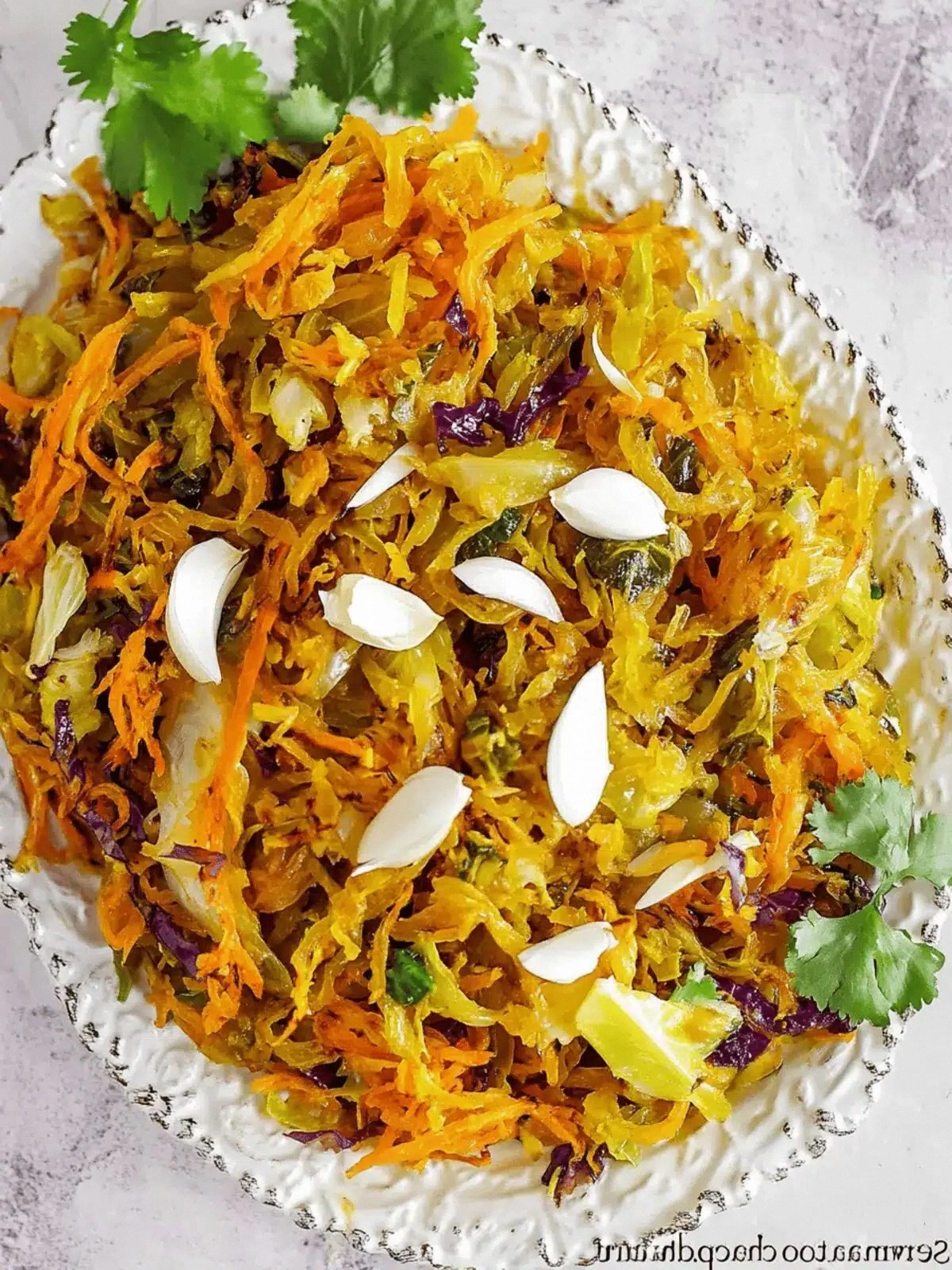
Shredded cabbage and carrots are the main actors, delivering crunch and sweetness. The cabbage’s fibrous structure holds up well under high heat, creating a satisfying bite that doesn’t become mushy. Carrots, with their natural sugars, caramelize beautifully, adding a sweet contrast to the savory spices.
Fresh grated coconut is a game‑changer, providing a creamy texture that coats the vegetables like a silky sauce. It also introduces a subtle tropical sweetness that balances the spices. If coconut isn’t available, shredded coconut flakes can be a suitable substitute, though the texture will be slightly drier.
The Unexpected Star
Curry leaves bring a bright, citrusy aroma that elevates the dish to new heights. Their unique flavor is a hallmark of South Indian cooking and can’t be replicated by any other herb. If you can’t find curry leaves, a small amount of fresh lemon zest can mimic the citrus note, but the depth will be less pronounced.
Crushed peanuts or sesame seeds add a nutty crunch that contrasts with the roasted vegetables. They also provide a subtle oiliness that keeps the dish from drying out during roasting. For a vegan version, choose peanuts; for a slightly different flavor, sesame seeds work beautifully.
The Final Flourish
Lemon juice brightens the entire dish, cutting through the richness and adding a fresh zing. The acidity also helps tenderize the cabbage, making it even more palatable. If you prefer a sweeter finish, a splash of maple syrup or agave can replace the lemon juice, but the tartness will be missing.
Chopped cilantro and green chilies add a fresh, herbaceous layer that lifts the dish. Cilantro’s peppery bite contrasts with the sweetness of the carrots, while green chilies bring a subtle heat that keeps the dish lively. For a milder version, reduce the chilies or omit them entirely.
Everything's prepped? Good. Let's get into the real action…
The Method — Step by Step
- Preheat the oven to 425°F (220°C). The high heat is essential for caramelizing the sugars in the cabbage and carrots, creating a crispy edge that feels like a golden crust. While the oven warms, combine the cumin seeds, turmeric, and red pepper flakes in a small bowl. Toast them in a dry skillet over medium heat until they start to pop, releasing their aroma. This simple step intensifies the spices and prevents them from being lost in the oil.
- In a large mixing bowl, toss the shredded cabbage and carrots with the toasted spices. Make sure every leaf is coated; the spices need to cling to the surface to form that savory crust. Add the fresh grated coconut, chopped green chilies, and a pinch of salt, then stir until everything is evenly distributed. The coconut’s moisture will help the spices adhere, while the chilies add a subtle heat that awakens the senses.
- Heat the peanut oil in a large skillet over medium‑high heat. Once shimmering, pour the vegetable mixture into the skillet, spreading it out in an even layer. The oil should sizzle immediately, a sign that the pan is hot enough to sear the vegetables. Let the mixture cook without stirring for 3–4 minutes; this allows the edges to develop a golden brown crust. Flip the mixture once, using a spatula to turn the vegetables, and cook for an additional 2–3 minutes.
- Transfer the skillet to the preheated oven. Spread the vegetables in a single layer on a parchment‑lined baking sheet if you don’t have an oven‑safe skillet. Roast for 20 minutes, checking at the 10‑minute mark. The vegetables should emit a toasty aroma and the edges will start pulling away from the pan, signaling readiness.
- While roasting, prepare the tempering. In a small saucepan, heat the remaining peanut oil over medium heat. Add mustard seeds and let them pop, then toss in the chopped shallots or onions and sauté until translucent. Stir in the curry leaves, and let them sizzle for 30 seconds. This quick tempering releases the oils and intensifies the aromatic profile.
- Remove the vegetables from the oven and drizzle the tempering over them. Toss gently to coat each piece. The tempering adds a burst of flavor that cuts through the richness of the coconut and peanuts. Sprinkle the crushed peanuts or sesame seeds on top for a nutty crunch.
- Finish with a squeeze of fresh lemon juice and a sprinkle of chopped cilantro. The acidity brightens the dish, while the cilantro adds a fresh, herbaceous layer. Taste and adjust salt if needed, but the spices should carry the flavor.
- Serve immediately while the edges remain crisp. This dish pairs beautifully with steamed rice, flatbread, or a simple salad. The combination of textures—crunchy edges, tender interior, and creamy coconut—creates a satisfying mouthfeel that feels both indulgent and wholesome.
- Enjoy the moment. The aroma, the crunch, the burst of spices—this is a dish that invites you to savor every bite. I dare you to taste this and not go back for seconds. The experience is unforgettable, and the memory of that first bite will linger long after the plate is empty.
That's it — you did it. But hold on, I've got a few more tricks that'll take this to another level…
Insider Tricks for Flawless Results
The Temperature Rule Nobody Follows
Roasting at 425°F (220°C) is the sweet spot for caramelization without burning. Many people lower the heat to avoid scorching, but this often results in soggy vegetables. Keep the oven at a high temperature and use a heat‑resistant skillet or sheet to maintain consistent heat. If your oven runs hot, lower the temperature by 25°F to prevent over‑browning.
Why Your Nose Knows Best
Trust your nose to tell you when the spices are ready. A faint, nutty aroma signals that the cumin and turmeric have released their oils. If the smell is weak, give the pan a few more minutes. A strong, fresh scent from the tempering indicates that the mustard seeds have popped and the curry leaves are ready to release their citrusy notes.
The 5-Minute Rest That Changes Everything
After roasting, let the dish rest for 5 minutes before serving. This brief pause allows the flavors to settle and the heat to distribute evenly. It also gives the crust a chance to firm up slightly, ensuring that each bite has that satisfying crunch. If you’re in a hurry, you can skip this step, but the experience will feel less refined.
Balancing Sweet and Heat
The carrots provide natural sweetness, while the red pepper flakes and green chilies add heat. If you prefer a milder version, reduce the chilies or replace them with a pinch of smoked paprika for a subtle depth. Conversely, for an extra kick, double the red pepper flakes and add a splash of hot sauce after roasting.
Freshness Is Key
Using fresh, high‑quality ingredients makes a noticeable difference. Fresh coconut has a bright, buttery flavor that enhances the dish, while fresh ginger and curry leaves add aromatic complexity. If you’re in a pinch, frozen shredded cabbage works, but it may release more moisture, so adjust the oil accordingly.
Serve with a Tangy Side
Pair the roasted cabbage with a simple cucumber raita or a lemon‑yogurt dip to balance the richness. The cool, creamy texture of the raita complements the heat and adds a refreshing contrast. If you’re vegan, a tahini‑lemon sauce works wonderfully.
Creative Twists and Variations
This recipe is a playground. Here are some of my favorite ways to switch things up:
Smoky BBQ Twist
Swap the turmeric and red pepper flakes for smoked paprika and a splash of maple syrup. The result is a sweet, smoky flavor that pairs well with grilled meats. Top with a drizzle of smoky BBQ sauce before serving for an extra punch.
Mediterranean Flair
Replace the peanut oil with olive oil and add a handful of chopped sun‑dried tomatoes. The Mediterranean tomatoes provide a tangy burst that contrasts with the coconut. Finish with a sprinkle of feta cheese for a salty finish.
Spicy Peanut Noodles
Serve the roasted cabbage over a bed of soba or rice noodles tossed in peanut sauce. The noodles absorb the savory flavors, while the cabbage adds crunch. Top with crushed peanuts and fresh lime wedges for a vibrant finish.
Coconut Curry Variation
Add a splash of coconut milk to the tempering and simmer until it thickens slightly. The creamy sauce coats the vegetables, creating a rich, comforting dish. Pair with steamed jasmine rice for a complete meal.
Vegan “Cheese” Upgrade
Sprinkle nutritional yeast over the roasted vegetables before serving. The yeast adds a cheesy, umami flavor that complements the spices. This simple addition transforms the dish into a hearty, protein‑rich entrée.
Salsa Verde Finish
Top the roasted cabbage with a vibrant salsa verde made from tomatillos, jalapeños, cilantro, and lime juice. The fresh, green salsa cuts through the richness and adds a zesty brightness. This variation is perfect for a quick weeknight dinner.
Storing and Bringing It Back to Life
Fridge Storage
Store the roasted cabbage in an airtight container in the refrigerator for up to 4 days. The crunchy edges may soften slightly, but the flavor remains robust. Reheat in a skillet over medium heat, adding a splash of water to steam the vegetables back to life.
Freezer Friendly
Freeze the roasted cabbage in a freezer‑safe container for up to 2 months. Thaw overnight in the refrigerator before reheating. Add a teaspoon of oil when reheating to restore crispness. The dish’s flavor profile remains intact, making it a convenient meal prep option.
Best Reheating Method
The best way to reheat is in a skillet with a little oil over medium heat. The oil helps revive the crisp edges, while a splash of water or broth creates steam that keeps the interior moist. Finish with a squeeze of fresh lemon juice to brighten the flavors before serving.