I still remember the Tuesday night I almost ordered takeout for the third time that week. My fridge held nothing but a pack of chicken breasts, some sad cherry tomatoes, and half a tub of feta threatening to walk itself to the trash. I was this close to dialing the pizza place when I thought, "What if I could make something that tastes like I booked a last-minute flight to Santorini?" Twenty-five minutes later my kitchen smelled like rosemary and sunshine, and I was standing over the skillet eating olives straight from the pan. That spontaneous throw-together became this Easy Mediterranean Chicken, and it has since rescued me from drive-through shame more times than I care to admit.
Picture this: the chicken hits the hot olive oil and that first sizzle sounds like applause. Garlic dives in next, releasing its perfume so quickly the dog trots over to investigate. Oregano and thyme bloom in the fat, turning the oil into a bronze-green elixir that smells like a hillside in Crete. Tomatoes soften, olives add their briny bass note, and feta melts into little salty pockets that glue everything together. The whole symphony is done in the time it takes to stream two songs, and the payoff is so disproportionately huge you'll feel like you cheated the flavor economy.
I'm not exaggerating when I say this is the best version you'll ever make at home. Most recipes get this completely wrong—either they drown the chicken in a muddy tomato sauce or they under-season so aggressively you might as well be chewing cardboard. This one nails the sweet spot: the spices form a crust that crackles like thin ice, the tomatoes burst into fresh little jams, and the feta melts just enough to sauce the whole thing without turning into chalky blobs. I dare you to taste this and not go back for seconds; I'll be honest, I ate half the batch before anyone else got to try it.
Stay with me here—this is worth it. We're going to sear, season, and sprinkle our way to a plate that looks like it came from a white-tablecloth taverna but costs less than a fancy coffee. Let me walk you through every single step—by the end, you'll wonder how you ever made it any other way.
What Makes This Version Stand Out
- Lightning Speed: From fridge to table in under thirty minutes, which means you can walk in the door after work and still eat like you're on vacation. The trick is in the order of operations—season first, sear second, then let the oven finish while you pour yourself a glass of crisp white wine.
- Layered Flavor in One Pan: Instead of marinating for hours, we create a quick spice crust that tastes like it spent the afternoon soaking in lemon and herbs. Paprika brings a whisper of smoke, oregano gives that sun-dried bite, and thyme adds a piney perfume that teleports you straight to the Aegean.
- Feta That Actually Melts: Most recipes toss the feta on at the end and you get rubbery cubes. We add it during the last two minutes so it softens into creamy little pockets that act like built-in sauce. The result is rich without being heavy, tangy without making you pucker.
- Tomatoes That Pop, Not Stew: Cherry tomatoes hit the pan at the perfect moment—long enough to blister and concentrate their sweetness, short enough to stay bright and juicy. They become tiny bombs of summer that burst in your mouth and keep the dish tasting fresh, not braised.
- Olives With Purpose: Kalamatas aren't just salty punctuation marks here; we halve them so they warm through and release their winey aroma into the oil. Every other bite gives you that briny pop that makes you reach for your water glass in the best possible way.
- Make-Ahead Magic: The spice blend can be mixed on Sunday, the chicken can be pre-seasoned the night before, and leftovers reheat like a dream for lunch boxes. Double the batch and you'll thank yourself on Thursday when the only thing standing between you and hanger is ninety seconds in the microwave.
Alright, let's break down exactly what goes into this masterpiece...
Inside the Ingredient List
The Flavor Base
Olive oil is the liquid gold that carries every other flavor, so skip the generic bottle that's been sitting above your stove since last Thanksgiving. Reach for something labeled "cold-pressed" and harvest-dated within the last year; it should smell grassy and peppery, like you just mowed a lawn in Tuscany. You only need two tablespoons here, but quality matters because it's both your cooking medium and your sauce. If you absolutely must substitute, avocado oil works, though you'll lose that herbal backbone that screams Mediterranean.
Garlic is the aromatic hype man, and fresh is non-negotiable. Those jars of pre-minced stuff taste like disappointment and metal. Smash three cloves with the flat of your knife, let them sit for sixty seconds while the allicin develops (science says it boosts health benefits), then mince fine. If you've ever struggled with bitter, acrid garlic, you're not alone—and I've got the fix: keep the heat medium-high and add it after the chicken has seared so it browns, not burns.
The Texture Crew
Chicken breasts are the blank canvas, but we treat them like prime real estate. Look for ones that are plump and pale peach, not gray or bloated with solution. If they're thick on one end and skinny on the other, pound them to an even ¾ inch so they cook at the same pace—no more rubbery tips and raw centers. Boneless and skinless keeps weeknight easy, but if you want to level up, skin-on thighs buy you more wiggle room on timing and deliver extra silkiness.
Cherry tomatoes should feel heavy for their size and still have a faint garden aroma at the stem. Skip any with wrinkles or black spots; they're past their prime and will taste flat. Halving them is oddly therapeutic—pop them stem-side up and slice right through the equator so they keep their cute little cheeks. If cherry tomatoes are out of season, grape tomatoes work, but they won't burst as dramatically.
The Unexpected Star
Kalamata olives bring the umami punch that makes people ask, "What's that amazing flavor?" Buy them pitted unless you enjoy wrestling with olive stones while your chicken goes cold. Look for glossy, dark violet-black fruits packed in brine, not the canned black rings that taste like tin. Halving them exposes the flesh so they warm through and release their winey, almost fig-like complexity into the pan juices.
Feta in brine is the creamy counterpoint that tames the salty olives and acidic tomatoes. Avoid the pre-crumbled, dry stuff that behaves like sawdust. You want a block swimming in cloudy whey—it stays moist, milky, and melts like a dream. Crumble it yourself; the irregular chunks create pockets of sauce instead of disappearing into the dish.
The Final Flourish
Dried oregano and thyme are the herbs that teleport your taste buds to a cliffside village. Dried concentrates the oils, so you need less and get more punch. Rub them between your palms before sprinkling; the friction releases volatile compounds that would otherwise stay locked up. If you've only got Italian seasoning, you can use that, but the flavor will be muddier—like listening to a symphony through a wall.
Paprika is the stealth ingredient that gives the chicken a bronzed glow and whisper of smoke. Use sweet, not hot, unless you want to set your tongue on vacation in Budapest. Smoked paprika adds campfire intrigue, but regular works fine—just promise me you bought a fresh jar sometime this year. That tin from 2014 isn't doing you any favors.
Everything's prepped? Good. Let's get into the real action...
The Method — Step by Step
- Pat the chicken breasts absolutely dry with paper towels—moisture is the enemy of a golden crust. Season both sides generously with salt, pepper, paprika, oregano, and thyme, pressing the spices in so they adhere like glitter on craft day. The salt should look like a light snowfall, not a blizzard; you're seasoning the surface, not curing the meat. Let them sit while the skillet heats so the salt can start dissolving and working its magic on the protein.
- Heat a large stainless or cast-iron skillet over medium-high for two full minutes. Add the olive oil; it should shimmer immediately and race to the edges like liquid mercury. If it smokes, lower the heat slightly—you want a confident sizzle, not an alarm clock. Lay the chicken away from you so you don't splash hot oil up your forearm; there should be an audible hiss that makes you feel like a pro.
- Cook the first side undisturbed for four minutes. Resist the urge to poke, lift, or peek—every jiggle tears the crust you're building. While it cooks, the edges will turn opaque halfway up the side; that's your visual cue that the bottom is bronzed, not beige. If you've ever had chicken stick and shred, you're not alone—and I've got the fix: when the crust is ready, the meat will release itself like magic. Trust the process and keep your spatula holstered.
- Flip and sear the second side for three minutes. The top should now sport a mottled, toasty surface that smells like pizza crust. Add the minced garlic around the chicken, stirring it quickly so it perfumes the oil without scorching. You'll see it turn golden in about sixty seconds; that's your cue to keep moving it with a wooden spoon so every piece kisses the heat.
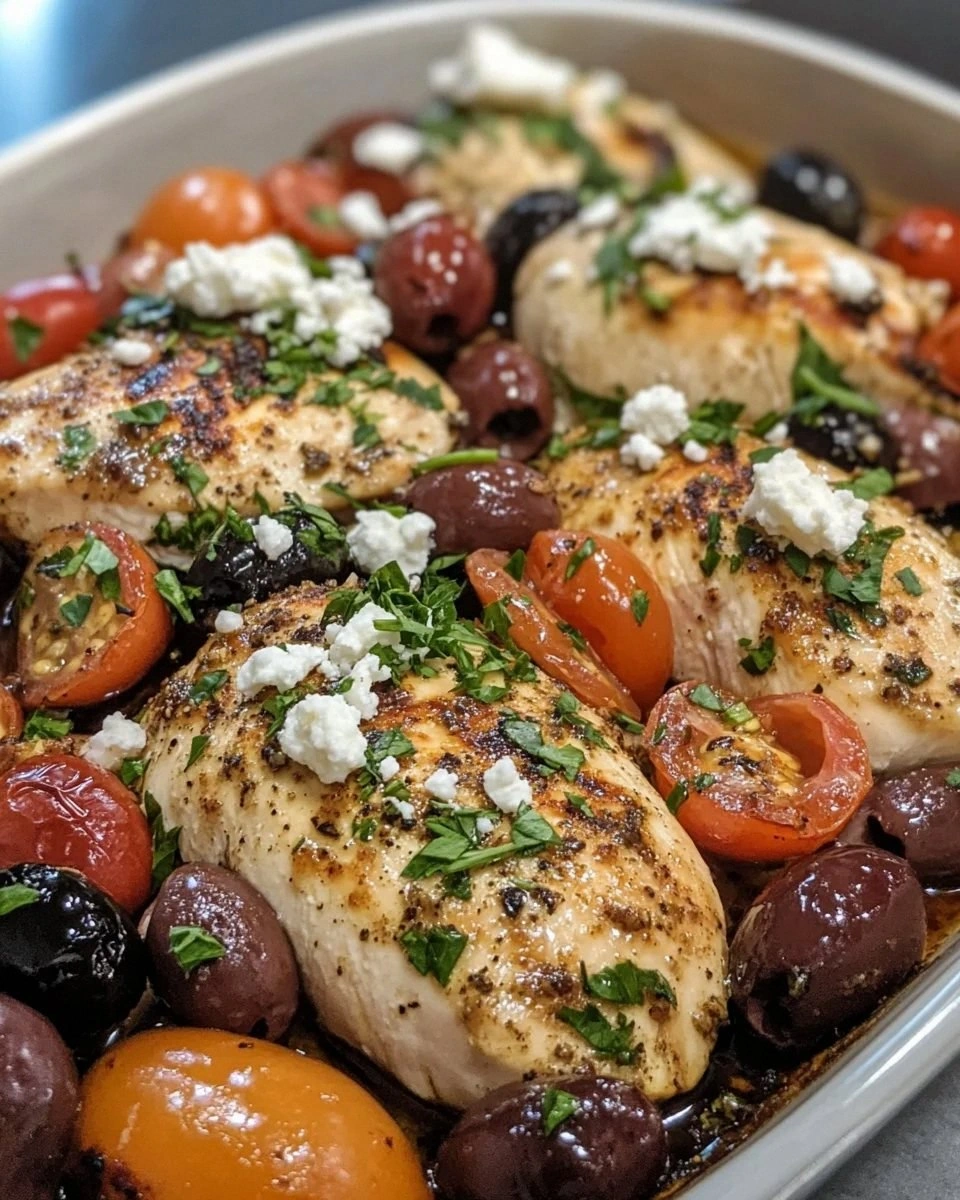
- Scatter in the halved cherry tomatoes and olives. They'll tumble around the chicken like colorful marbles, hissing as they hit the hot fat. Use tongs to nestle some cut-side down so they get direct heat and blister faster. The olives will darken slightly and release a briny aroma that makes your mouth water instantly; that's the flavor backbone of the whole dish.
- Reduce heat to medium, cover, and let everything simmer for six minutes. This gentle steam finishes the chicken so it stays juicy while the tomatoes collapse into a fresh, light sauce. Peek once; the chicken should read 160°F on an instant-read thermometer and the tomatoes should look like they've been sunbathing—wrinkled and rosy. If you pierce a tomato, it should release hot juice that mingles with the olive oil into a glossy emulsion.
- Turn off the heat and immediately sprinkle the crumbled feta over everything. Tent loosely with foil and let it rest for two minutes—just long enough for the feta to soften into creamy pockets without turning rubbery. The residual heat does the work; the cheese will look slightly melted but still hold its shape, like snow beginning to fold into warm earth. Scatter fresh parsley for color and a final hit of grassy freshness, then serve straight from the pan so none of that sauce goes to waste.
That's it—you did it. But hold on, I've got a few more tricks that'll take this to another level...
Insider Tricks for Flawless Results
The Temperature Rule Nobody Follows
Bring your chicken to room temp for twenty minutes before it hits the pan. Cold meat shocks the skillet, drops the heat, and you end up steaming instead of searing. I know, I know—food-safety alarms are ringing in your head. But twenty minutes on the counter won't summon bacteria; it just relaxes the proteins so they cook evenly and stay tender. A friend tried skipping this step once—let's just say it didn't end well and we nicknamed the result "rubber sole à la king."
Why Your Nose Knows Best
Don't trust the clock; trust your senses. When the garlic smells like you've walked into an Italian grandmother's kitchen, it's ready. When the olives release a winey perfume that makes you involuntarily close your eyes, you're there. And when the oregano hits hot fat and you can practically hear bouzouki music, that's the sweet spot. Cooking is a conversation between you and your food; listen more than you speak.
The 5-Minute Rest That Changes Everything
After you pull the chicken off heat, let it nap under foil for five full minutes. The juices redistribute, the internal temp coasts to the safe 165°F, and you avoid the dreaded Sahara-dry breast. Use this window to set the table, pour wine, or Instagram your masterpiece—just don't skip it. Slice too early and you'll watch all that flavor puddle sadly on the cutting board instead of staying inside where it belongs.
One-Pan Cleanup Without the Tantrum
While the skillet is still warm, splash in a quarter-cup of water and bring it to a gentle simmer. Use a wooden spoon to scrape up the bronzed bits—they'll lift like magic and save you from an hour of steel-wool scrubbing. Pour the flavorful liquid over rice or couscous and you've turned dishwater into gold. My roommate calls this "lazy gourmet," and honestly, I'll take the compliment.
Creative Twists and Variations
This recipe is a playground. Here are some of my favorite ways to switch things up:
Lemon-Herb Explosion
Add the zest of one lemon plus a squeeze of juice right after the tomatoes burst. The citrus lifts all the savory notes and makes the dish taste like you're dining alfresco on Mykonos. Swap parsley for fresh dill if you're feeling fancy; it plays beautifully with the feta and makes the whole pan smell like a garden after rain.
Spicy Calabrian Upgrade
Stir in a teaspoon of chopped Calabrian chilies with the garlic. They bring a mellow, fruity heat that blooms slowly instead of torching your tongue. If you can't find them, a pinch of red-pepper flakes works, but go easy—this isn't meant to be a dare.
Green-Olive & Artichoke Detour
Trade Kalamatas for buttery Castelvetrano olives and fold in a handful of quartered artichoke hearts during the last two minutes. The flavors shift from briny to buttery, and the artichokes soak up the tomato juices like little edible sponges. Vegetarians at the table? Skip the chicken and serve this over giant couscous for a killer main.
Summer Veggie Bonanza
Toss in diced zucchini and yellow squash when you add the tomatoes. They soften quickly, add color, and stretch the recipe to feed a hungry crowd. The squash releases just enough liquid to loosen the sauce without turning it watery—perfect for spooning over crusty bread.
Winter Comfort Mode
Roast everything on a sheet pan at 425°F instead of searing. The chicken skin crisps, tomatoes blister, and olives wrinkle into olive "raisins" that taste like concentrated umami bombs. Finish with feta and a drizzle of honey for a sweet-salty finish that'll ruin you for ordinary roast chicken.
Seafood Spin-Off
Replace chicken with fat shrimp or scallops; sear them just until they blush, then proceed with tomatoes and olives. Seafood cooks faster, so dinner lands in fifteen minutes flat. A squeeze of orange juice at the end bridges seafood and feta in a way that feels Michelin-level but takes zero effort.
Storing and Bringing It Back to Life
Fridge Storage
Cool leftovers completely, then pack into airtight glass containers. They'll keep four days in the fridge, though the tomatoes taste brightest within the first forty-eight hours. Store the chicken and sauce together; the juices keep the meat moist and infuse even more flavor as it sits. If you separated everything, you'd lose that magical mingling that makes next-day lunch feel intentional instead of sad.
Freezer Friendly
Slice the chicken and freeze it flat in a single layer inside a zip-top bag. Once solid, break the slices into however much you need; they thaw in minutes under warm running water. Freeze the sauce separately in ice-cube trays so you can pop out a cube to brighten soups, omelets, or bland grocery-store hummus. Properly frozen, both components stay stellar for up to two months—meaning you can have a Mediterranean staycation on a random Wednesday night without any prep.
Best Reheating Method
Skip the microwave if you want that just-cooked vibe. Warm a skillet over medium, add a splash of water, then slide in the chicken and sauce. Cover for three minutes; the gentle steam revives the tomatoes and keeps the feta creamy instead of rubbery. If you're in a rush, microwave at 70% power in thirty-second bursts, adding a damp paper towel over the top to create a mini sauna. Either way, finish with a fresh sprinkle of herbs and a tiny drizzle of olive oil so it tastes like you just whipped it up from scratch.